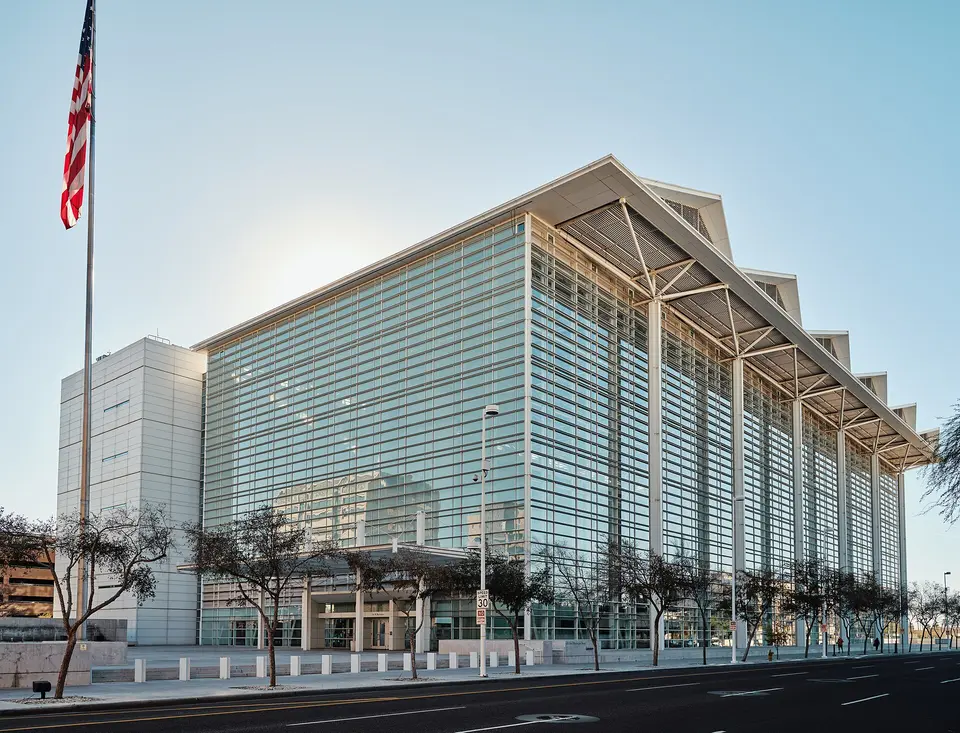

Arizona officials have asked the U.S. Supreme Court to stop a court-appointed receiver from taking over the state prison health system, after both a federal district judge and the 9th Circuit declined to pause the order, according to the Arizona Mirror and Arizona Capitol Times coverage.
The consequence arrives fast. U.S. District Judge Roslyn Silver has set Oct. 19 as the date receiver Annette Chambers-Smith assumes control, the Capitol Times reported. Without a stay, a non-state official will be empowered to direct hiring and firing, terminate contracts, and, with court permission, require additional state spending.
State attorneys argue the takeover is unlawful and unnecessary given what they call tangible progress, citing the federal Prison Litigation Reform Act's requirement to use the least intrusive remedy and warning of potential chaos if the 9th Circuit later reverses the order, the Capitol Times reported from Wednesday's filing.
Silver ordered an overhaul in 2023 after finding constitutional deficiencies in prison healthcare. She has questioned the pace of improvement and noted the litigation dates to 2012 with repeated state assurances to do better, according to the Capitol Times. The Arizona Mirror characterized the high-court appeal as a last-ditch or "Hail Mary" effort.
Notably, the state's lawyers do not dispute that Arizona prisons still fail to meet legal standards for care, the Capitol Times reported. Their position is that sanctions short of receivership are available and adequate while appeals continue.
For the emergency ask, the state retained Supreme Court specialist Paul Clement, who, according to Reuters as cited by the Capitol Times, bills $2,650 per hour. That is a premium price to preserve control of a core state function now at risk of being outsourced by court order.
Under the court-driven overhaul, Arizona has doubled spending on inmate healthcare, added staff, improved facilities, and expanded access to substance-use disorder treatment, per the Capitol Times. Even so, Silver's receivership order reflects her conclusion that progress has not met constitutional requirements.
The request lands on Justice Elena Kagan's shadow docket. She can seek a response from the inmates' lawyers or refer the matter to the full court, the Capitol Times noted. The Supreme Court has not set a timeline for action.
This is a governance test for the Hobbs administration. Director Ryan Thornell was appointed by Gov. Katie Hobbs and confirmed by the Senate. If receivership begins on Oct. 19, operational control over prison health shifts away from Arizona's elected and accountable officials to a court officer with authority to compel more spending.
What to watch next: whether Kagan or the full court issues a temporary administrative stay before Oct. 19; any data the state offers to substantiate "tangible progress"; and how quickly the 9th Circuit rules on the underlying appeal. The denominators matter here. Spending has gone up, but the state concedes it is still short of legal compliance.