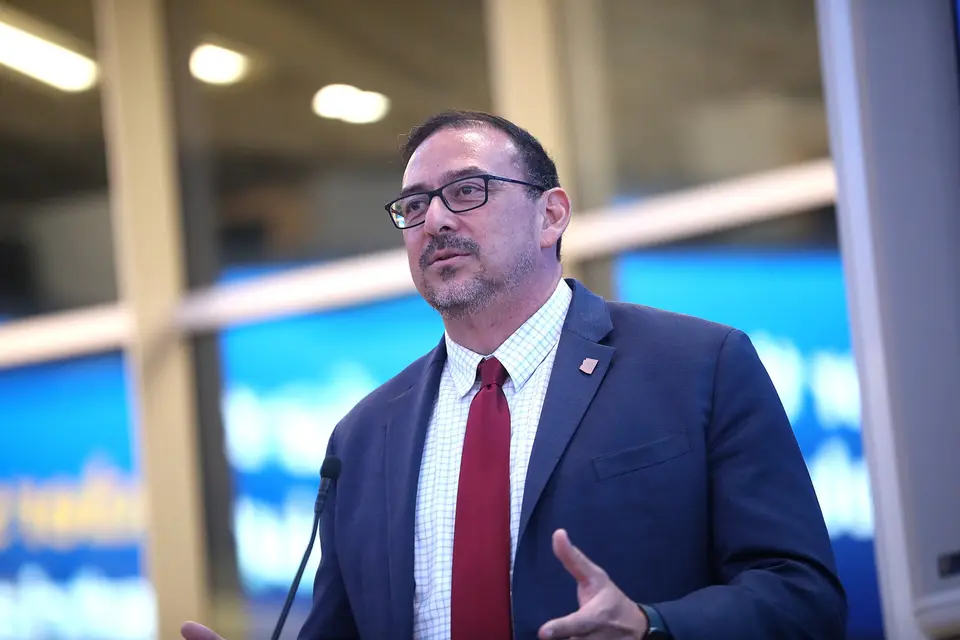
Arizona's secretary of state debate on KAET-TV set a stark legal contrast: Adrian Fontes called Arizona elections "safe and secure," while challenger Alexander Kolodin refused to give that assurance, focusing instead on voter confidence and the system's credibility (Arizona Capitol Times, 9/1/26).
The consequence is immediate. With mail voting used by most Arizonans, their next chief elections officer will decide how to handle federal data demands, Trump-era postal rules, and a November ballot measure that could force new identification procedures on early ballots.
Kolodin argued confidence is at "an all-time low" and placed blame on Fontes. Fontes countered that Kolodin helped create distrust by filing 2020 challenges that a federal judge said were "sorely wanting of relevant or reliable evidence," and he highlighted State Bar probation placed on Kolodin for those cases (Capitol Media Services report).
That disciplinary history matters to voters weighing legal competence. U.S. District Judge Diane Humetewa criticized affidavits and expert reports as anonymous, hearsay, or irrelevant, and the State Bar imposed an 18-month probation requiring ethics coursework, including on meritorious claims. Those are clear authority-and-outcome markers that undercut Kolodin's past litigation.
Kolodin, in turn, pressed Fontes on records and voter-roll stewardship. According to the Capitol Media Services account, Kolodin obtained a federal court order compelling Fontes to turn over records Fontes is legally required to maintain for accurate rolls. That is a concrete remedy against the incumbent and raises a governance question: why did a court have to order production at all?
The pair also split over federal data grabs. Fontes fought Trump administration demands for unredacted voter rolls, including partial Social Security numbers. Kolodin called that a waste of taxpayer dollars because the federal government already issues those numbers. He conceded, however, that Fontes won in federal court here and in roughly two dozen states, and that the Supreme Court has not weighed in. Outcome matters: Fontes prevailed, but he chose litigation to get there.
On proposed Trump administration postal rules to block delivery of ballots to voters in states that refuse to feed a federal database, Fontes again chose to sue alongside other states. Kolodin said he has a way to keep voter rolls clean without giving Washington anything, but he did not describe a method on-air. That omission leaves remedy and implementation unanswered.
The legal fault line over mail voting tightened around Proposition 144, sponsored by Kolodin. It would require voters to produce identification before casting a ballot. Kolodin said it would not end early voting by mail but offered no mechanics, and the measure text offers none, per the report. Fontes called mail ID under Prop. 144 "impossible" to administer without in-person delivery or photocopies of IDs in the envelope, dismissing it as unworkable. That is a practical administration claim voters should test against the actual statute if it passes.