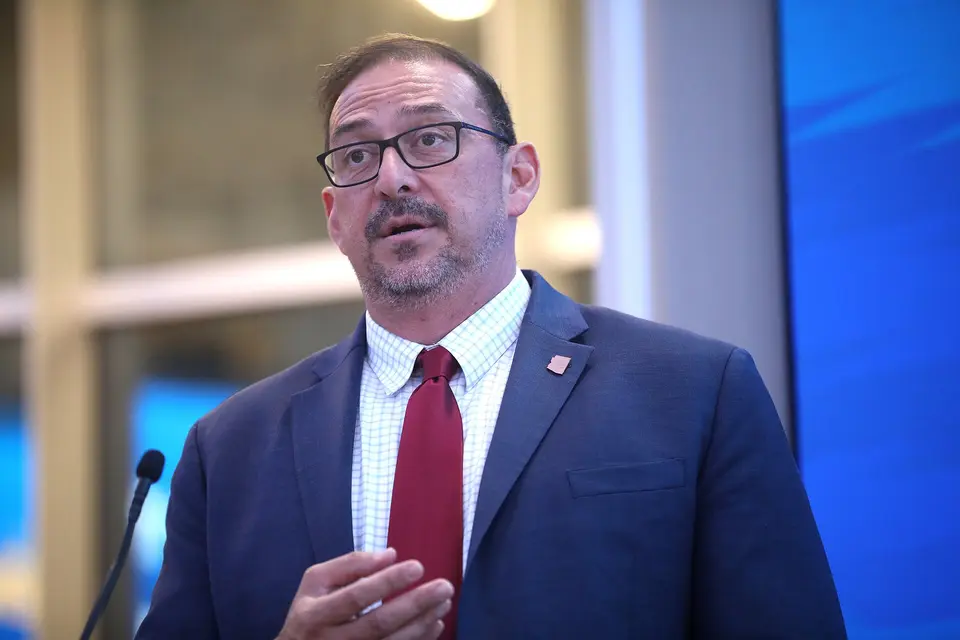
A Maricopa County judge ruled that Secretary of State Adrian Fontes acted illegally by using the word "vouchers" to describe Arizona's Empowerment Scholarship Account program in the official description of Proposition 212, and that the term cannot appear on the ballot, according to the court's order reported Wednesday.
Judge Julie Ann Mata found that while "voucher" is a common political label, it does not appear in the ESA statute. She noted the Arizona Supreme Court struck down vouchers more than a decade ago but upheld ESAs, making the programs legally distinct. Using the voucher label in a ballot summary, she wrote, risks misleading voters about that distinction.
The consequence is practical and immediate. State law requires the secretary of state to draft a description of each measure and explain the effect of a yes or no vote, with those summaries printed directly on mailed and in-person ballots. Precision is not optional in that context. The court concluded Fontes' phrasing failed that standard.
"Because the phrase may cause voters to treat legally distinct programs as the same, the court concludes that the use of 'school voucher programs' is misleading," Mata wrote. Fontes' office did not comment on whether he will appeal.
In the materials at issue, Fontes described approving Prop. 212 as an amendment to "Arizona's Empowerment Scholarship (ESA) school voucher program," and then listed proposed changes. Those included limits on how ESA funds could be spent and a $150,000 family income cap for eligibility.
The Arizona Free Enterprise Club, which supports protecting and expanding ESAs, argued the program is "definitely not" a voucher. That dispute mattered because the court anchored its ruling in the text of Arizona law and prior case outcomes rather than political shorthand.
Arizona lawmakers enacted a voucher program in 2006. The state Supreme Court invalidated it three years later under the constitution's ban on appropriating public funds in aid of private and parochial schools. In 2011, lawmakers created ESAs, which deposit funds in parent-controlled accounts for private tuition, fees, or other education expenses. The Court of Appeals held ESAs are not subsidies to private schools because parents, not the state, decide where the money goes. The Supreme Court upheld that ruling in 2014.
Since then, eligibility expanded beyond students with special needs to include D or F rated schools, foster children, military families, and children on reservations. In 2022, lawmakers removed all limits, and participation rose from about 12,000 students to more than 100,000, with the annual cost now exceeding $1 billion.
Backers of Prop. 212, including the Arizona Education Association and Save Our Schools, say the measure would rein in the cost of universal ESAs without affecting students who qualified before 2022. Mata's order did not address the merits of Prop. 212 itself, only the accuracy of the secretary's chosen terminology.