
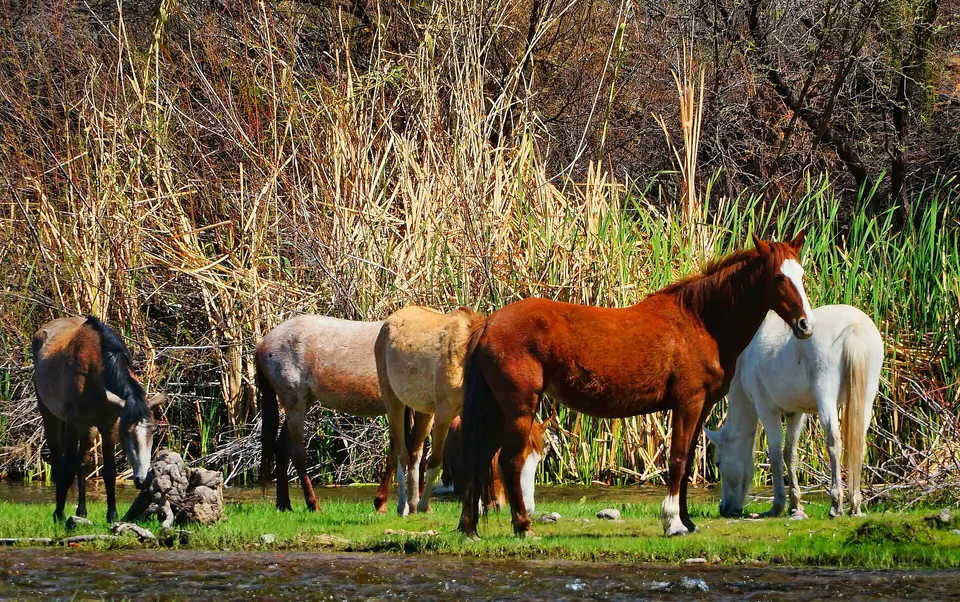
A new Arizona Capitol Times column is asking a blunt question about the Salt River horses: did lawmakers write a protection law that agencies are now using to quietly cut the herd anyway? In an Aug. 7 piece, writer Doreen Falzon urges Arizona's legal community to scrutinize how the 2016 Salt River Horse Act is being interpreted on the ground.
According to Falzon, the Legislature passed the act in response to a removal threat and chose tight protections: the horses are not stray livestock; no one may harass, capture, chase, or euthanize them without written authorization; and any such authorization is limited to what lawmakers called "humane purposes." The statute also required the state to enter an agreement with the U.S. Forest Service to implement the law or address issues with the herd.
Here is the friction point that affects everyone who uses the river: Falzon says the Arizona Department of Agriculture approved a management agreement that aims to drive the herd from roughly 274 horses to about 120 over five years. Whether that is wise range management or not, she argues the legal question comes first. Can healthy horses be removed simply to hit a negotiated population number if the statute only authorizes action for humane purposes?
Falzon notes the law does not define "humane purposes." That silence matters. She asks whether the 2017 intergovernmental agreement merely implements the statute or if the department believes the agreement itself permits population-based removals. Arizonans deserve to see the legal theory, she writes, before healthy horses are permanently taken from a herd the Legislature meant to protect.
The column characterizes the Salt River Horse Act as a protection statute that restrains government action rather than a broad grant of management power. If lawmakers wanted to authorize long-term population reductions to meet target numbers, the piece argues, they could have said so plainly. They did not, and words matter in law.
Our view from the local beat is simple: if an agency is pursuing numeric targets, it should publish the agreement, the legal memo that ties each action to statute, and the decision trail in one place the public can read. Open files and clear citations are basic accountability. Vague references to contracts are not.
Falzon also points to federal context. The Forest Service distinguishes between wild horses, which receive protections, and feral horses, which do not. She notes authorities are investigating the slaughter of dozens of horses last October in the Apache-Sitgreaves National Forests. That separate case underscores why definitions and jurisdiction are not academic when lives and public resources are at stake.
Importantly, Falzon is not arguing against management. She frames the issue as rule-of-law: when government exercises power over a protected public resource, that authority should be explicit, transparent, and traceable to statute. Contracts can implement legislative authority, but they cannot replace it.